Showing posts with label Nissan. Show all posts

Thursday, July 14, 2011

New Gen Y Buyer Survey Spells Trouble for Detroit


Auto pricing website TrueCar studied the car buying behaviour of four million Gen Y (18 to 27 year-old) over a twenty-four month period and here’s what they found.
Scion took the crown for top brand, with 37.4% of the market and for top model (the tC coupe), with 21.2%, while second place went to Mitsubishi (32.1%) and their Lancer sedan (20.3%).
Mazda was the third most visited brand for Gen Y buyers, though only 17th in terms of model. The top four vehicle choices were Japanese, with a German in seventh place and a South Korean in ninth.

Video: Nissan LEAF Climbs the Pikes Peak


Last month, Nobuhiro “Monster” Tajima broke his own record at the Pikes Peak Hill Climb with a sub 10 minutes time in a 910-horsepower modified Suzuki SX4 racecar.
Now, Nissan’s first all-electric car, the LEAF, has tackled the 156 turns of the “Race to the Clouds”. Naturally, “Monster” Tajima can rest assured that his record remains safe.
That’s not to say that the LEAF driven by Chad Hord didn’t record a respectable time. After all, 14 minutes and 33 seconds with an average speed of 51.2 mph (82.4 km/h) is not to be laughed at for an EV that used just 46% of its charge to cover the demanding 12.42 miles (20 km) hill climb.
Watch the LEAF climb the Pikes Peak after the jump.

Tuesday, June 14, 2011

Delay in production of Made in USA Nissan Leaf?


One of Nissan Motor Co. top official said that US may see delay in the start of U.S. built Nissan Leaf electric car because of the disruption caused by the huge quake in Japan.

Hideaki Watanabe, vice president in charge of Nissan's global Zero Emission Vehicle business unit, said many timetables had been thrown off by the March 11 earthquake, as Nissan focused all of its resources on restoring its manufacturing output in Japan.

Watanabe said "there's a risk" of delay but it was too early to estimate how long that might be.

The quake's impact "is putting us in a very difficult situation," Watanabe said at a briefing at the Nissan Technical Center North America in Farmington Hills.

Nissan has sold 7,554 Leaf cars since the model's launch late last year. Nearly 5,000 have been delivered to Japanese customers, and just under 2,100 to buyers in the United States — the Leaf's second-biggest market.

This year, Nissan expects to ship 10,000 to 12,000 Leaf cars to the U.S. — below expectations of as many as 20,000.

Src: [The Detroit News]

Tuesday, May 10, 2011

2011 Nissan Mine’s GT-R for Tony Kanaan by CEC

If you are a fan of the Indy Pro Series then a name like Tony Kanaan more than rings a bell. For those of you who don’t know the name, here’s a little 411: Kanaan is a Brazilian race car driver who won the 2004 Indy Racing League IndyCar Series championship driving Andretti Green Racing’s 7-Eleven sponsored car. A champ like this deserves nothing less than to drive a vehicle that matches his status, so CEC Wheels in Miami took on the job of transforming an already stunning Nissan GT-R into a vehicle fit for a champion.

Taking the smooth lines of the GT-R to the next level is a new front spoiler, a new grille, an engine cover, hood scoops, mirror covers, side skirts, trunk, rear diffuser, and a rear wing all made in carbon fiber. With a name like CEC Wheels, a new set of Yokohama AVS M7 forged wheels painted in gloss black were a must in the makeover. The interior was also spiffed up with some black leather, Recaro CS seats, a Password JDM carbon rear speaker shelf, a Password JDM carbon rear seat delete, and a K40 Radar with Jammers.

On the mechanical side, CEC went to work by adding a coilover suspension, a big 405mm rotor kit, stainless brake lines, racing brake pads, and a new titanium exhaust system.

http://the-autocars.blogspot.com/2011 Nissan Mine’s GT-R for Tony Kanaan by CEC

http://the-autocars.blogspot.com/2011 Nissan Mine’s GT-R for Tony Kanaan by CEC

http://the-autocars.blogspot.com/2011 Nissan Mine’s GT-R for Tony Kanaan by CEC

Saturday, April 23, 2011

Nissan Frontier

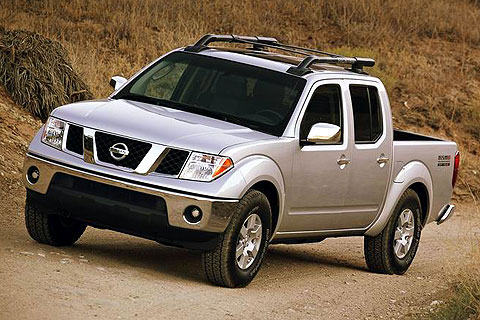
Nissan Frontier is the name for the D22 and D40 generations of Nissan pickup trucks in North, Central and South America and the Philippines. The line was started in 1998, and its immediate predecessor is the D21 Nissan Hardbody truck. As of 2002, the D22 series Nissan Truck is no longer sold in Japan, with the primary market having been relocated to North America, built at the Smyrna, Tennessee Nissan factory. Nissan was the pioneer of the Hardbody or Nissan Navara since 1986. The first was the D21, considered to be a small pick up. After more than 10 years with the D21, the second generation Navara was manufactured from 1998 and went until 2005 which was classed as a compact sized pick up. It was replaced with the bigger, taller, longer D40, which Nissan now considers to be a mid-size pick up truck. The Navara gets its name from the Navarre region of northern Spain, and the European version is built at the Nissan factory in Barcelona. The Frontier was introduced in 1997 for the 1998 model year as a replacement for the aging 1986.5–1997 Nissan Hardbody Truck. Nissan first offered the Frontier with a 4-cylinder engine, the KA24DE, but added the V6 engine, the VG33E in 1999. Elsewhere, the Frontier was also known as the Nissan Navara. That changed, with the introduction of the 2000 Frontier Crew Cab. The Crew Cab was the first compact pickup to offer a 4-door body-style in North America. Until that point, crew cabs were heavy duty versions of full-size trucks and were mainly used as commercial vehicles, although four-door compact pickups existed in Asia and Europe for decades. For 2001, Nissan facelifted the Frontier, introducing bolder styling in an effort to make it more appealing to younger buyers in its second generation. The Frontier was completely redone after the 2004 model year, which later resulted in the suspension of the regular cab model, indefinitely.


The first Gen Frontier (2001–2004) was not sold or produced in Japan. Sales and production started in North America, with Crew Cab and King Cab versions and new grille, bumper, headlights, taillights, built in fender flares, and tailgates. Available engines include a petrol 2.4L, 3.3L, and a 3.3L Supercharged version 210 hp (160 kW). It is available with both 2 wheel and 4 wheel drive. The plant in Spain replaced production in Japan. They began exporting the second generation to Central and South America where it is called Frontier. Single Cabs and Crew Cabs are available with the Petrol or Diesel engines, 2wd and 4wd. Also in Australia and New Zealand. Brazil plant started production around 2002 (Crew Cab Diesel 2wd or 4wd, 5 speed manual, or single cab 2wd Diesel. Only for export to Mexico petrol 2.4 cc Built in Mexico) and export to Argentina (all Brazilians versions) and Mexico (Crew Cab, Petrol 2.4L, 2wd, Manual 5 speed). Egypt Plant export to Middle East, South Africa Plant to African countries. Mexico production, starting in 2008: D22 truck Single Cab Chassis and Long Bed (2wd or 4wd, Petrol 2.4L or Diesel, Crew Cab (2wd and Petrol) called D22 Pick up, Nissan Mexicana import from USA D40 Frontier V6. Initially, the Frontier was considered a compact, but beginning with the totally redesigned model year 2005 Frontier (introduced at the 2004 North American International Auto Show), it became more mid-sized. It uses the new Nissan F-Alpha platform and exterior body styling resembles that of the company's full-size Nissan Titan truck. The new truck's wheelbase is 125.9 in (3.20 m) with a 205.5 in (5.22 m) overall length. Towing capacity is 6500 lb (2,950 kg). A 4.0 L VQ-family V6, the VQ40DE, is the standard engine, and it produces a respectable 265 hp (198 kW) with 284 ft·lbf (385 N·m) of torque. Also available is the QR25DE four-cylinder engine, which is also found in the Nissan Altima. A six-speed manual is standard with a five-speed automatic optional. Both rear and four-wheel drive are available. Traction control and hill-descent control are also available. The Frontier is called Navara when sold in Europe. The engine is a 2.5 L YD25DDTi diesel, with 142 hp (106 kW) or 172 hp (128 kW). The stronger version has 403 N·m (297 lb·ft) of torque.


Nissan has released the complete details and images of the 2010 Nissan Navara facelift along with the 2011 Nissan Pathfinder facelift. The 2010 Nissan Navara facelift are now powered by a new 3.0-litre V6 turbo V9X Engine diesel engine producing 240 hp (175 kW),406 lb-ft (500 Nm) @ 2,500 rpm and a revised 2.5-litre dCi unit(YD25DDTi High Power). The 2011 Nissan Navara and Pathfinder facelift V6 develop 170 kW (231 PS) and 550 Nm of torque between 1,700 rpm and 2,500 rpm an the famous YD engine which produces 190 PS (140 kW) and 450 Nm of torque an the VQ40DE remains the same with the 265 hp @5600 rpm; 291 ft·lbf (395 N·m) @4000 rpm. There are subtle changes to the headlights and the bonnet. The v-shaped grille shell is less pronounced and the bumper is rounder and projects 80mm further forward, but it's the six-spoke 17-inch alloy wheels or optional 18-inch alloy wheels that will be the plainest tell-tale to the new vehicle's identity. Inside the new Navara (top of the line model), Nissan designers have specified softer materials of a better quality for the dash, seats and interior moulds. The centre console and fascia designs have been revised, as have the instrument binnacle layout and door trims. Additional bright/gloss finish surfacing is used throughout the cabin. The six-stack CD audio system or the TV Navigation entertainment console is upgraded with speed-sensing volume, MP3 compatibility and Bluetooth connectivity for the (six-stack CD audio system). Other new or revised features include dual-zone climate control, remote audio/Bluetooth/trip computer controls on the steering wheel, trip computer, external temperature gauge, speed-sensitive variable windscreen wipers and 'follow me home' lighting. The electric mirrors now fold in fully for car washes or parking in narrow spaces. The Frontier is known as Nissan Navara in most of Europe and Australia and New Zealand, and Nissan Terrano in Chile (only D40 series is known as Navara). It is currently built in Smyrna, Tennessee, Spain, South Africa, Thailand, Philippines, China, Mexico, Brazil and Egypt.The D40 Navara has undergone Euro NCAP crash testing along with the Mitsubishi Triton and Isuzu D-Max, and received one star with a strikeout; however, after retesting with upgraded computer software it went from the lowest in the group to the highest (overall) with 3 stars. Among the problems discovered during the test was delayed airbag deployment and insufficient seatbelt restraint, which were solved with the software upgrade.

Nissan Frontier

Nissan Frontier is the name for the D22 and D40 generations of Nissan pickup trucks in North, Central and South America and the Philippines. The line was started in 1998, and its immediate predecessor is the D21 Nissan Hardbody truck. As of 2002, the D22 series Nissan Truck is no longer sold in Japan, with the primary market having been relocated to North America, built at the Smyrna, Tennessee Nissan factory. Nissan was the pioneer of the Hardbody or Nissan Navara since 1986. The first was the D21, considered to be a small pick up. After more than 10 years with the D21, the second generation Navara was manufactured from 1998 and went until 2005 which was classed as a compact sized pick up. It was replaced with the bigger, taller, longer D40, which Nissan now considers to be a mid-size pick up truck. The Navara gets its name from the Navarre region of northern Spain, and the European version is built at the Nissan factory in Barcelona. The Frontier was introduced in 1997 for the 1998 model year as a replacement for the aging 1986.5–1997 Nissan Hardbody Truck. Nissan first offered the Frontier with a 4-cylinder engine, the KA24DE, but added the V6 engine, the VG33E in 1999. Elsewhere, the Frontier was also known as the Nissan Navara. That changed, with the introduction of the 2000 Frontier Crew Cab. The Crew Cab was the first compact pickup to offer a 4-door body-style in North America. Until that point, crew cabs were heavy duty versions of full-size trucks and were mainly used as commercial vehicles, although four-door compact pickups existed in Asia and Europe for decades. For 2001, Nissan facelifted the Frontier, introducing bolder styling in an effort to make it more appealing to younger buyers in its second generation. The Frontier was completely redone after the 2004 model year, which later resulted in the suspension of the regular cab model, indefinitely.


The first Gen Frontier (2001–2004) was not sold or produced in Japan. Sales and production started in North America, with Crew Cab and King Cab versions and new grille, bumper, headlights, taillights, built in fender flares, and tailgates. Available engines include a petrol 2.4L, 3.3L, and a 3.3L Supercharged version 210 hp (160 kW). It is available with both 2 wheel and 4 wheel drive. The plant in Spain replaced production in Japan. They began exporting the second generation to Central and South America where it is called Frontier. Single Cabs and Crew Cabs are available with the Petrol or Diesel engines, 2wd and 4wd. Also in Australia and New Zealand. Brazil plant started production around 2002 (Crew Cab Diesel 2wd or 4wd, 5 speed manual, or single cab 2wd Diesel. Only for export to Mexico petrol 2.4 cc Built in Mexico) and export to Argentina (all Brazilians versions) and Mexico (Crew Cab, Petrol 2.4L, 2wd, Manual 5 speed). Egypt Plant export to Middle East, South Africa Plant to African countries. Mexico production, starting in 2008: D22 truck Single Cab Chassis and Long Bed (2wd or 4wd, Petrol 2.4L or Diesel, Crew Cab (2wd and Petrol) called D22 Pick up, Nissan Mexicana import from USA D40 Frontier V6. Initially, the Frontier was considered a compact, but beginning with the totally redesigned model year 2005 Frontier (introduced at the 2004 North American International Auto Show), it became more mid-sized. It uses the new Nissan F-Alpha platform and exterior body styling resembles that of the company's full-size Nissan Titan truck. The new truck's wheelbase is 125.9 in (3.20 m) with a 205.5 in (5.22 m) overall length. Towing capacity is 6500 lb (2,950 kg). A 4.0 L VQ-family V6, the VQ40DE, is the standard engine, and it produces a respectable 265 hp (198 kW) with 284 ft·lbf (385 N·m) of torque. Also available is the QR25DE four-cylinder engine, which is also found in the Nissan Altima. A six-speed manual is standard with a five-speed automatic optional. Both rear and four-wheel drive are available. Traction control and hill-descent control are also available. The Frontier is called Navara when sold in Europe. The engine is a 2.5 L YD25DDTi diesel, with 142 hp (106 kW) or 172 hp (128 kW). The stronger version has 403 N·m (297 lb·ft) of torque.


Nissan has released the complete details and images of the 2010 Nissan Navara facelift along with the 2011 Nissan Pathfinder facelift. The 2010 Nissan Navara facelift are now powered by a new 3.0-litre V6 turbo V9X Engine diesel engine producing 240 hp (175 kW),406 lb-ft (500 Nm) @ 2,500 rpm and a revised 2.5-litre dCi unit(YD25DDTi High Power). The 2011 Nissan Navara and Pathfinder facelift V6 develop 170 kW (231 PS) and 550 Nm of torque between 1,700 rpm and 2,500 rpm an the famous YD engine which produces 190 PS (140 kW) and 450 Nm of torque an the VQ40DE remains the same with the 265 hp @5600 rpm; 291 ft·lbf (395 N·m) @4000 rpm. There are subtle changes to the headlights and the bonnet. The v-shaped grille shell is less pronounced and the bumper is rounder and projects 80mm further forward, but it's the six-spoke 17-inch alloy wheels or optional 18-inch alloy wheels that will be the plainest tell-tale to the new vehicle's identity. Inside the new Navara (top of the line model), Nissan designers have specified softer materials of a better quality for the dash, seats and interior moulds. The centre console and fascia designs have been revised, as have the instrument binnacle layout and door trims. Additional bright/gloss finish surfacing is used throughout the cabin. The six-stack CD audio system or the TV Navigation entertainment console is upgraded with speed-sensing volume, MP3 compatibility and Bluetooth connectivity for the (six-stack CD audio system). Other new or revised features include dual-zone climate control, remote audio/Bluetooth/trip computer controls on the steering wheel, trip computer, external temperature gauge, speed-sensitive variable windscreen wipers and 'follow me home' lighting. The electric mirrors now fold in fully for car washes or parking in narrow spaces. The Frontier is known as Nissan Navara in most of Europe and Australia and New Zealand, and Nissan Terrano in Chile (only D40 series is known as Navara). It is currently built in Smyrna, Tennessee, Spain, South Africa, Thailand, Philippines, China, Mexico, Brazil and Egypt.The D40 Navara has undergone Euro NCAP crash testing along with the Mitsubishi Triton and Isuzu D-Max, and received one star with a strikeout; however, after retesting with upgraded computer software it went from the lowest in the group to the highest (overall) with 3 stars. Among the problems discovered during the test was delayed airbag deployment and insufficient seatbelt restraint, which were solved with the software upgrade.

Thursday, March 17, 2011

Nissan Rogue

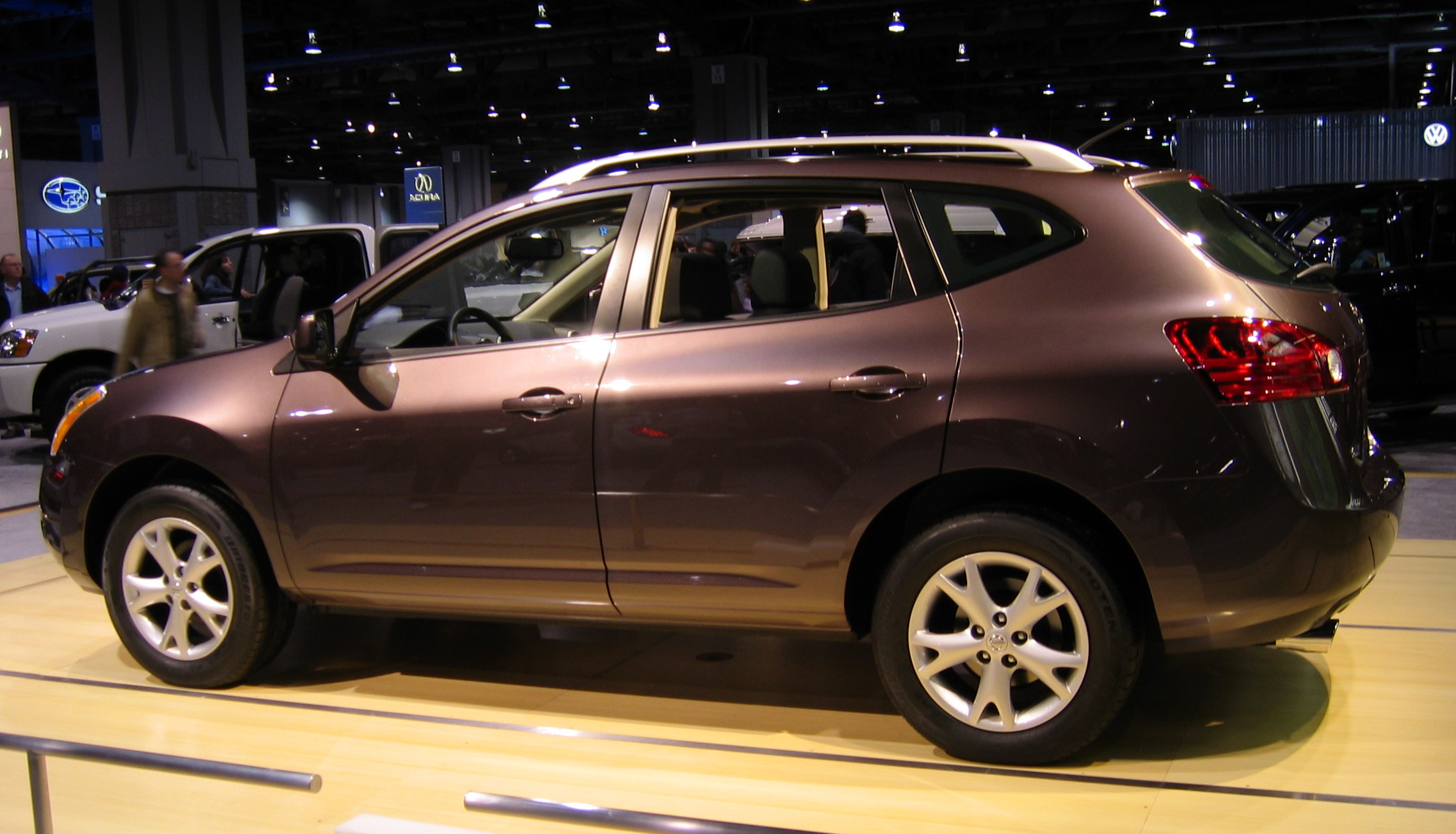
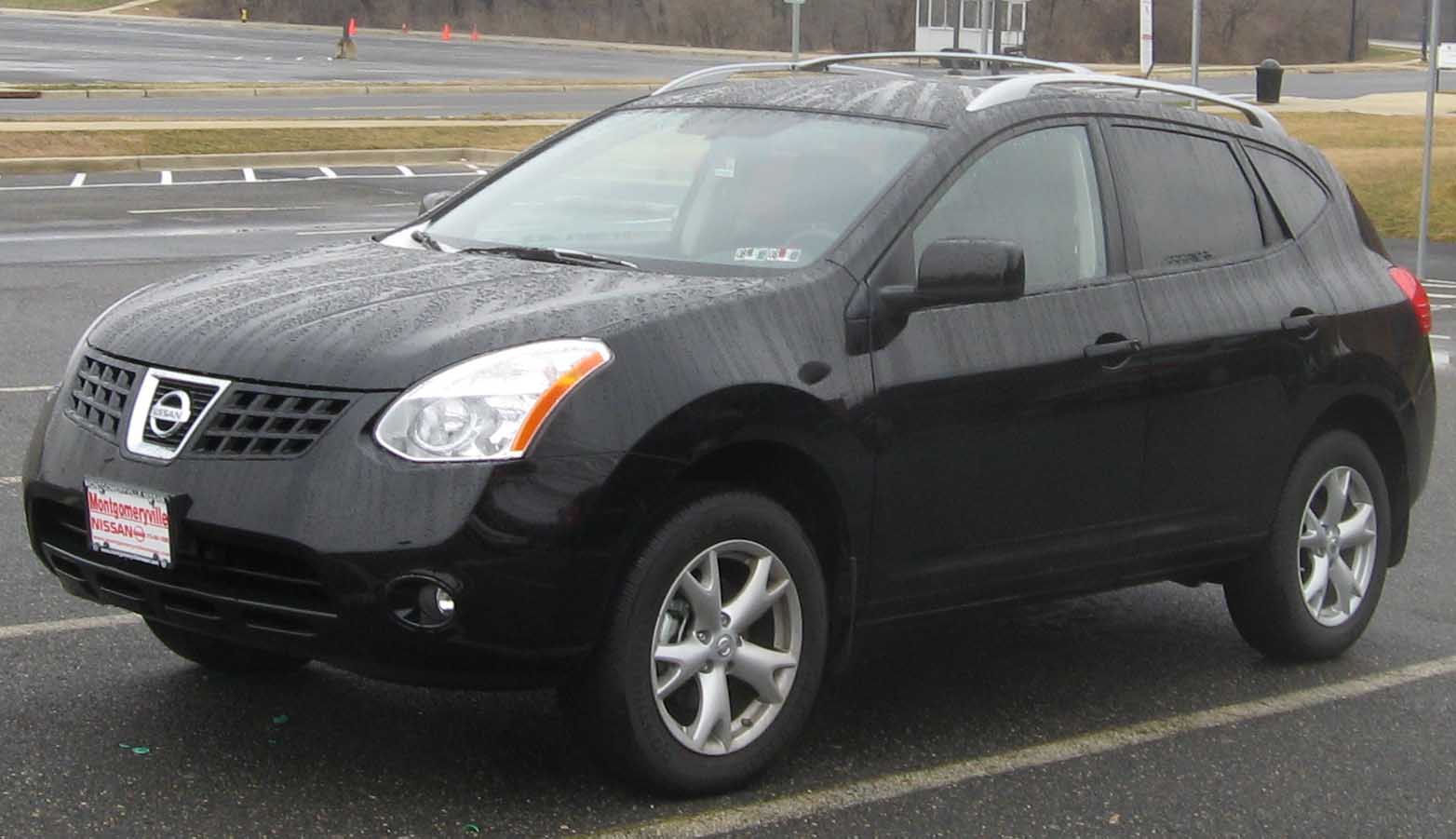
The Nissan Rogue is a compact crossover SUV (although slightly a long-wheelbase version of the Nisan Qashqai) that debuted in October 2007 for the 2008 model year, produced by the Japanese automaker Nissan. It is the North American counterpart of the X-Trail sold outside North America (even though it is still sold in Mexico), as well as the Qashqai in Europe and the Dualis in Japan and Australia. The Nissan Rogue made its debut at the North American International Auto Show in Detroit on January 7, 2007. It replaces the Nissan X-Trail in Canada as Nissan's entry-level SUV and the body-on-frame Nissan Xterra in Mexico due to the Smyrna plant freeing capacity for the 2009 Suzuki Equator, but the Xterra continues on sale in the United States and Canada after being withdrawn from the Mexican market after the 2008 model year. An all-new version of the X-Trail, whose platform the Rogue shares, has been launched in Europe, Mexico and elsewhere, but there are no plans to market it in both USA and Canada. The Rogue is powered by a 170 hp (127 kW; 172 PS), 2.5 L four-cylinder QR25DE engine mated to a standard continuously variable transmission., and comes standard with front-wheel-drive. The Rogue costs less than Nissan's Murano crossover SUV, but at 97.5 cu ft (2.76 m3) vs. 108.8 cu ft (3.08 m3) offers less passenger volume than its V6-powered sibling, and a smaller cargo area of 28.9 cu ft (820 L) vs. 31.6 cu ft (890 L).

Nissan Rogue On The Parking Area


Nissan Rogue Review - Kelley Blue Book

The Nissan Rogue comes in only two trims: S and SL. S is the base model, which comes factory equipped with anti-lock brakes; air conditioning; cruise control; power windows, locks, and mirrors; remote keyless entry; and AM/FM/CD stereo with four speakers and auxiliary input jack. An optional "360 Value" package on the S model adds 16-inch alloy wheels, auto-dimming rearview mirror with rear view monitor, body-color rear spoiler, chrome grille, and rear privacy glass. An S Krōm trim edition includes Krōm integrated body design, center exit exhaust, body-color rear spoiler, 17-inch brilliant-finish aluminum-alloy wheels, and rear privacy glass. The SL trim level adds 17-inch alloy wheels, 6-way adjustable driver’s seat, roof rails, body-color power outside mirrors, rear tinted glass and a polished exhaust-tip, as well as with HID headlights, paddle-shifters (option removed for 2010), foglights, an 8-speaker stereo system, and leather seating. Both trims are available with Front-wheel drive and All-wheel drive. The Rogue has received a mild refresh for the 2011 model year. The revised trim packages are the S and SV. The S is available in a sporty "Krom" edition, which gets special 18-inch polished wheels, a center-exit sport-tuned exhaust, a unique grille and bumper with fog lamps, and other styling tweaks. The SV is available with an optional SL package, adding leather seats, touch screen navigation system and 18" alloy wheels, along with other premium features.

Nissan Rogue Engine Detail

Nissan Rogue Baggage

Safety features include front airbags, side-impact airbags, side-curtain airbags with rollover sensors, tire-pressure monitor, ABS with brake-assist and electronic brake-force distribution, traction control, and anti-skid control. National Highway Traffic Safety Administration (NHTSA) Crash Test Ratings.
Awards and recognition
* 2010 Rogue Awarded Consumers Digest's Automotive Best Buy Award.
* 2010 Rogue Received NHTSA's Highest Side-Impact Safety Rating(five stars).
From 1966 to 1969, American Motors used the Rogue nameplate on the Rambler American for its top trim two-door hardtop and convertible models, as well as performance editions.

Nissan Rogue

The Nissan Rogue is a compact crossover SUV (although slightly a long-wheelbase version of the Nisan Qashqai) that debuted in October 2007 for the 2008 model year, produced by the Japanese automaker Nissan. It is the North American counterpart of the X-Trail sold outside North America (even though it is still sold in Mexico), as well as the Qashqai in Europe and the Dualis in Japan and Australia. The Nissan Rogue made its debut at the North American International Auto Show in Detroit on January 7, 2007. It replaces the Nissan X-Trail in Canada as Nissan's entry-level SUV and the body-on-frame Nissan Xterra in Mexico due to the Smyrna plant freeing capacity for the 2009 Suzuki Equator, but the Xterra continues on sale in the United States and Canada after being withdrawn from the Mexican market after the 2008 model year. An all-new version of the X-Trail, whose platform the Rogue shares, has been launched in Europe, Mexico and elsewhere, but there are no plans to market it in both USA and Canada. The Rogue is powered by a 170 hp (127 kW; 172 PS), 2.5 L four-cylinder QR25DE engine mated to a standard continuously variable transmission., and comes standard with front-wheel-drive. The Rogue costs less than Nissan's Murano crossover SUV, but at 97.5 cu ft (2.76 m3) vs. 108.8 cu ft (3.08 m3) offers less passenger volume than its V6-powered sibling, and a smaller cargo area of 28.9 cu ft (820 L) vs. 31.6 cu ft (890 L).

Nissan Rogue On The Parking Area


Nissan Rogue Review - Kelley Blue Book

The Nissan Rogue comes in only two trims: S and SL. S is the base model, which comes factory equipped with anti-lock brakes; air conditioning; cruise control; power windows, locks, and mirrors; remote keyless entry; and AM/FM/CD stereo with four speakers and auxiliary input jack. An optional "360 Value" package on the S model adds 16-inch alloy wheels, auto-dimming rearview mirror with rear view monitor, body-color rear spoiler, chrome grille, and rear privacy glass. An S Krōm trim edition includes Krōm integrated body design, center exit exhaust, body-color rear spoiler, 17-inch brilliant-finish aluminum-alloy wheels, and rear privacy glass. The SL trim level adds 17-inch alloy wheels, 6-way adjustable driver’s seat, roof rails, body-color power outside mirrors, rear tinted glass and a polished exhaust-tip, as well as with HID headlights, paddle-shifters (option removed for 2010), foglights, an 8-speaker stereo system, and leather seating. Both trims are available with Front-wheel drive and All-wheel drive. The Rogue has received a mild refresh for the 2011 model year. The revised trim packages are the S and SV. The S is available in a sporty "Krom" edition, which gets special 18-inch polished wheels, a center-exit sport-tuned exhaust, a unique grille and bumper with fog lamps, and other styling tweaks. The SV is available with an optional SL package, adding leather seats, touch screen navigation system and 18" alloy wheels, along with other premium features.

Nissan Rogue Engine Detail

Nissan Rogue Baggage

Safety features include front airbags, side-impact airbags, side-curtain airbags with rollover sensors, tire-pressure monitor, ABS with brake-assist and electronic brake-force distribution, traction control, and anti-skid control. National Highway Traffic Safety Administration (NHTSA) Crash Test Ratings.
Awards and recognition
* 2010 Rogue Awarded Consumers Digest's Automotive Best Buy Award.
* 2010 Rogue Received NHTSA's Highest Side-Impact Safety Rating(five stars).
From 1966 to 1969, American Motors used the Rogue nameplate on the Rambler American for its top trim two-door hardtop and convertible models, as well as performance editions.

Thursday, March 10, 2011

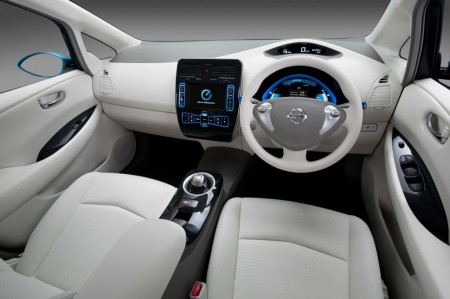
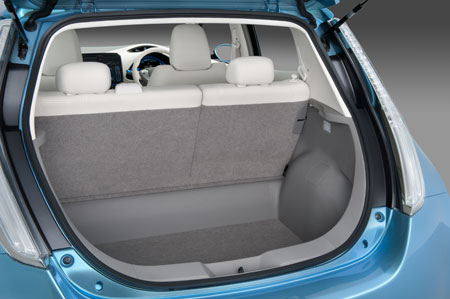
Nissan Leaf

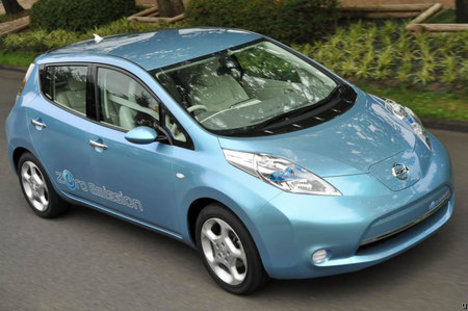
The Nissan Leaf (also formatted "LEAF" as a bacronym for Leading, Environmentally friendly, Affordable, Family car) is a five-door mid-size hatchback electric car manufactured by Nissan and introduced in Japan and the U.S. in December 2010. The United States Environmental Protection Agency determined the range to be 117 kilometres (73 mi), with an energy consumption of 765 kJ/km (34 kWh per 100 miles) and rated the Leaf's combined fuel economy at 99 miles per gallon gasoline equivalent. Deliveries began in the United States on December 11, 2010, and on December 22 in Japan. Sales are scheduled to begin in Portugal in January 2011, Ireland in February, the United Kingdom in March, and the Netherlands in June, with global market availability planned for 2012. According to Nissan initial availability is limited in quantities and to select markets and only for customers who made online reservations. The availability will be increased by the second quarter of 2011 with U.S. production planned for 2012. The Leaf's retail price in Japan starts at ¥3.76 million and US$32,780 in the United States. The price in the United Kingdom is GB£28,350 and around €35,000 in the other three European countries where it will be launched first. These prices include the price of the battery package. Most countries have applicable tax incentives or subsidies for eligible buyers that reduce the effective cost of purchase below the retail prices listed by Nissan. As an all-electric car the Nissan Leaf produces no tailpipe pollution or greenhouse gas emissions at the point of operation, and reduces dependence on petroleum. Among other awards and recognition, the Nissan Leaf won the 2010 Green Car Vision Award award, the 2011 European Car of the Year award, and ranks as the most efficient EPA certified vehicle for all fuels ever.


The Leaf's frontal style is characterized by a sharp V-shape design with large, up slanting light-emitting diode (LED) headlights that create a distinctive blue internal reflective design. The headlights also split and redirect airflow away from the door mirrors, which reduces wind noise and drag. The headlights consume 50% less electricity than halogen lamps. Nissan sought not to deter individuals away from the Leaf, giving it a familiar sedan- and hatchback-like design. The bottom of the car has aerodynamic paneling to reduce drag and improve aerodynamics as much as possible. Nissan says that the car has a top speed of over 150 km/h (93 mph). Its motor is rated at 80 kilowatts (110 hp) and 280 newton metres (210 lb·ft). Unofficially, 0 to 60 mph (0 to 97 km/h) performance has been tested at 9.9 seconds. The Leaf uses a front-mounted electric motor driving the wheels, powered by a 86 megajoules (24 kW·h) lithium ion battery pack rated to deliver up to 90 kilowatts (120 hp) power. The pack contains air-cooled, stacked laminar battery cells with lithium manganate cathodes. The battery and control module together weigh 300 kilograms (660 lb) and the specific energy of the cells is 140 W·h/kg. It is estimated that each battery pack costs Nissan US$18,000 (as of May 2010), and this cost is expected to be halved by mass production. Under its five-cycle testing, the United States Environmental Protection Agency found the Leaf's energy consumption to be 765 kJ/km (34 kWh/100 miles) and rated the Leaf combined fuel economy equivalent at 99 MPGe (2.4 L/100 km), with an equivalent 106 mpg-US (2.22 L/100 km; 127 mpg-imp) in city driving and 92 mpg-US (2.6 L/100 km; 110 mpg-imp) on highways. The battery pack is expected to retain 70% to 80% of its capacity after 10 years but its actual lifespan depends on how often fast charging (440-volt) is used and also on environmental factors. Nissan stated the battery has a "lifespan of 5–10 years under normal use". The Leaf's battery is guaranteed by Nissan for eight years or 100,000 miles (160,000 km). The battery pack consists of 48 modules and each module contains four cells and is assembled by Automotive Energy Supply Corporation (AESC) – a joint venture between Nissan, NEC and NEC Energy Devices. Since the battery is the heaviest part of any EV, Nissan housed the battery pack below the rear-seat compartment to keep the center of gravity as low as possible and also results in increased structural rigidity as compared to a conventional five-door hatchback.


The Leaf has two charging receptacles: a standard SAE J1772-2009 connector for level 1 and 2 recharging (120/220 volts AC) and a JARI Level 3 DC connector designed by TEPCO for high-voltage, DC fast charging (480 volts DC 125 amps) that uses the CHAdeMO protocol. Using the on-board 3.3-kilowatt (4.4 hp) charger the Leaf can be fully recharged from empty in 8 hours from a 220/240-volt 30 amp supply (5.2 kilowatts (7.0 hp) allowable draw) that can provide the on-board charger its full 3.3 kilowatts (4.4 hp) of usable power. In North America and Japan using a standard household outlet (120-volt, 15 amp breaker, 12 amp maximum allowable draw, 1.4 kilowatts (1.9 hp)) and the 7.5-meter (25 ft) cable included by Nissan, the Leaf will regain approximately 5 miles of range per hour. This type of charging is intended for convenience use when making stops or for emergency charging if you are within a short range of the charging destination. U.S. electrical regulations require a 240-volt charging station to be permanently wired to an AC outlet unless proper interlock mechanisms are available to ensure the charging current can be safely turned on and off. Nissan selected AeroVironment to supply its charging dock and installation services in North America. Using DC fast charging, the battery pack can be charged to 80% capacity in about 30 minutes. Nissan developed its own 500-volt DC fast charger that went on sale in Japan for ¥1,470,000 (around US$16,800) in May 2010 and plans to install 200 at dealers in Japan. Nissan warns that if fast charging is the primary way of recharging, then the normal and gradual battery capacity loss is about 10% more than regular 220-volt charging over a 10-year period. Other companies make compatible charging stations, and companies and local government have various initiatives to create networks of public charging stations (see electric vehicle network). Nissan plans to double the power of the on-board charger to 6.6-kilowatt (8.9 hp) in the 2012 model year Leaf. There are also plans to allow upgrades for the 2011 year model. Nissan officially introduced the Leaf in a ceremony held at its global headquarters in Yokohama on December 3, 2010. The first U.S. customer delivery took place in Northern California on December 11, 2010 and the first delivery in Japan took place at the Kanagawa Prefecture on December 22. Retail sales to individual consumers in Portugal, Ireland, the United Kingdom, and the Netherlands are scheduled to begin during the first quarter of 2011, and global market availability is planned for 2012. The Leaf does not have the Renault-Nissan's QuickDrop battery swap feature, but the allience's partnership with Better Place influenced Nissan's distribution plan for the U.S. which was based upon availability of electric vehicle networks.

Nissan Leaf

The Nissan Leaf (also formatted "LEAF" as a bacronym for Leading, Environmentally friendly, Affordable, Family car) is a five-door mid-size hatchback electric car manufactured by Nissan and introduced in Japan and the U.S. in December 2010. The United States Environmental Protection Agency determined the range to be 117 kilometres (73 mi), with an energy consumption of 765 kJ/km (34 kWh per 100 miles) and rated the Leaf's combined fuel economy at 99 miles per gallon gasoline equivalent. Deliveries began in the United States on December 11, 2010, and on December 22 in Japan. Sales are scheduled to begin in Portugal in January 2011, Ireland in February, the United Kingdom in March, and the Netherlands in June, with global market availability planned for 2012. According to Nissan initial availability is limited in quantities and to select markets and only for customers who made online reservations. The availability will be increased by the second quarter of 2011 with U.S. production planned for 2012. The Leaf's retail price in Japan starts at ¥3.76 million and US$32,780 in the United States. The price in the United Kingdom is GB£28,350 and around €35,000 in the other three European countries where it will be launched first. These prices include the price of the battery package. Most countries have applicable tax incentives or subsidies for eligible buyers that reduce the effective cost of purchase below the retail prices listed by Nissan. As an all-electric car the Nissan Leaf produces no tailpipe pollution or greenhouse gas emissions at the point of operation, and reduces dependence on petroleum. Among other awards and recognition, the Nissan Leaf won the 2010 Green Car Vision Award award, the 2011 European Car of the Year award, and ranks as the most efficient EPA certified vehicle for all fuels ever.


The Leaf's frontal style is characterized by a sharp V-shape design with large, up slanting light-emitting diode (LED) headlights that create a distinctive blue internal reflective design. The headlights also split and redirect airflow away from the door mirrors, which reduces wind noise and drag. The headlights consume 50% less electricity than halogen lamps. Nissan sought not to deter individuals away from the Leaf, giving it a familiar sedan- and hatchback-like design. The bottom of the car has aerodynamic paneling to reduce drag and improve aerodynamics as much as possible. Nissan says that the car has a top speed of over 150 km/h (93 mph). Its motor is rated at 80 kilowatts (110 hp) and 280 newton metres (210 lb·ft). Unofficially, 0 to 60 mph (0 to 97 km/h) performance has been tested at 9.9 seconds. The Leaf uses a front-mounted electric motor driving the wheels, powered by a 86 megajoules (24 kW·h) lithium ion battery pack rated to deliver up to 90 kilowatts (120 hp) power. The pack contains air-cooled, stacked laminar battery cells with lithium manganate cathodes. The battery and control module together weigh 300 kilograms (660 lb) and the specific energy of the cells is 140 W·h/kg. It is estimated that each battery pack costs Nissan US$18,000 (as of May 2010), and this cost is expected to be halved by mass production. Under its five-cycle testing, the United States Environmental Protection Agency found the Leaf's energy consumption to be 765 kJ/km (34 kWh/100 miles) and rated the Leaf combined fuel economy equivalent at 99 MPGe (2.4 L/100 km), with an equivalent 106 mpg-US (2.22 L/100 km; 127 mpg-imp) in city driving and 92 mpg-US (2.6 L/100 km; 110 mpg-imp) on highways. The battery pack is expected to retain 70% to 80% of its capacity after 10 years but its actual lifespan depends on how often fast charging (440-volt) is used and also on environmental factors. Nissan stated the battery has a "lifespan of 5–10 years under normal use". The Leaf's battery is guaranteed by Nissan for eight years or 100,000 miles (160,000 km). The battery pack consists of 48 modules and each module contains four cells and is assembled by Automotive Energy Supply Corporation (AESC) – a joint venture between Nissan, NEC and NEC Energy Devices. Since the battery is the heaviest part of any EV, Nissan housed the battery pack below the rear-seat compartment to keep the center of gravity as low as possible and also results in increased structural rigidity as compared to a conventional five-door hatchback.


The Leaf has two charging receptacles: a standard SAE J1772-2009 connector for level 1 and 2 recharging (120/220 volts AC) and a JARI Level 3 DC connector designed by TEPCO for high-voltage, DC fast charging (480 volts DC 125 amps) that uses the CHAdeMO protocol. Using the on-board 3.3-kilowatt (4.4 hp) charger the Leaf can be fully recharged from empty in 8 hours from a 220/240-volt 30 amp supply (5.2 kilowatts (7.0 hp) allowable draw) that can provide the on-board charger its full 3.3 kilowatts (4.4 hp) of usable power. In North America and Japan using a standard household outlet (120-volt, 15 amp breaker, 12 amp maximum allowable draw, 1.4 kilowatts (1.9 hp)) and the 7.5-meter (25 ft) cable included by Nissan, the Leaf will regain approximately 5 miles of range per hour. This type of charging is intended for convenience use when making stops or for emergency charging if you are within a short range of the charging destination. U.S. electrical regulations require a 240-volt charging station to be permanently wired to an AC outlet unless proper interlock mechanisms are available to ensure the charging current can be safely turned on and off. Nissan selected AeroVironment to supply its charging dock and installation services in North America. Using DC fast charging, the battery pack can be charged to 80% capacity in about 30 minutes. Nissan developed its own 500-volt DC fast charger that went on sale in Japan for ¥1,470,000 (around US$16,800) in May 2010 and plans to install 200 at dealers in Japan. Nissan warns that if fast charging is the primary way of recharging, then the normal and gradual battery capacity loss is about 10% more than regular 220-volt charging over a 10-year period. Other companies make compatible charging stations, and companies and local government have various initiatives to create networks of public charging stations (see electric vehicle network). Nissan plans to double the power of the on-board charger to 6.6-kilowatt (8.9 hp) in the 2012 model year Leaf. There are also plans to allow upgrades for the 2011 year model. Nissan officially introduced the Leaf in a ceremony held at its global headquarters in Yokohama on December 3, 2010. The first U.S. customer delivery took place in Northern California on December 11, 2010 and the first delivery in Japan took place at the Kanagawa Prefecture on December 22. Retail sales to individual consumers in Portugal, Ireland, the United Kingdom, and the Netherlands are scheduled to begin during the first quarter of 2011, and global market availability is planned for 2012. The Leaf does not have the Renault-Nissan's QuickDrop battery swap feature, but the allience's partnership with Better Place influenced Nissan's distribution plan for the U.S. which was based upon availability of electric vehicle networks.

Thursday, February 24, 2011

Nissan Serena


Elegant Nissan Serena


Black Ice Nissan Serena


Nissan Serena Interior


Nissan Serena Inside Preview


Purple Nissan Serena


Luxury Nissan Serena


Television On The Nissan Serena

Tuesday, February 22, 2011

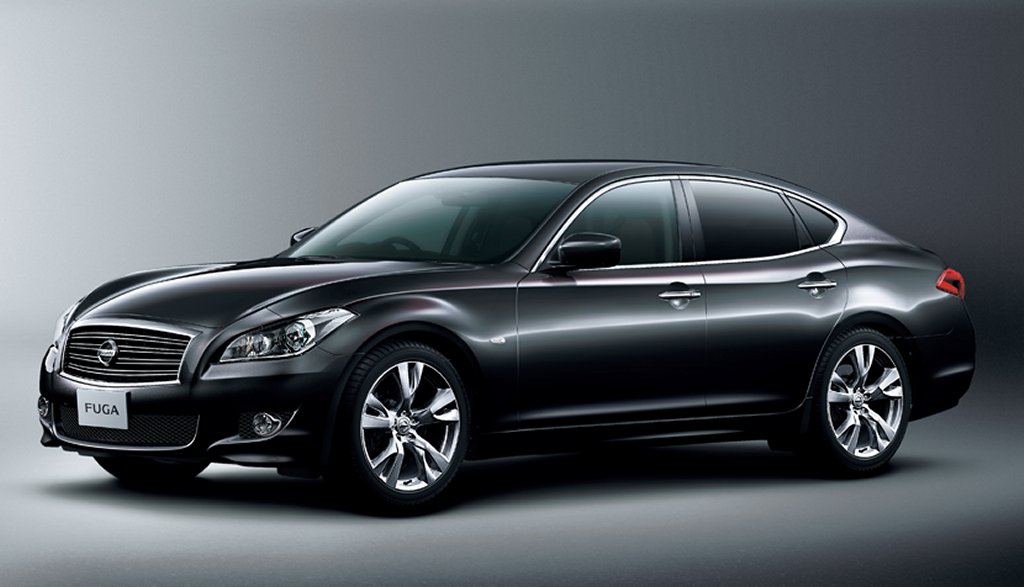
2011 Nissan Fuga


2011 Nissan Fuga (Infiniti M35)


2011 Nissan Fuga New Generation


Elegant Black 2011 Nissan Fuga


2011 Nissan Fuga Hybrid


White 2011 Nissan Fuga


2011 Nissan Fuga Hatchback


2011 Nissan Fuga Interior


2011 Nissan Fuga Elegant Rare Seat


Sporty 2011 Nissan Fuga